Wednesday, 5 October 2011

Backing the Underdog

Tesco are without doubt one of the UK's most impressive companies. Since the late 90's they have grown massively, starting with their implementation of 'extra' stores which seem to sell almost everything, then moving into local market with their 'metro' stores and more recently they are challenging the likes of Argos with their own catalogue offering.

Near Cardiff in South Wales is a village called Dinas Powys and about 3 miles away from Dinas is a large Tesco superstore in Penarth. It is the main supermarket serving the area and as far as we are aware, is always very busy - in fairness it is a very good store in a handy location for the Vale and even Cardiff Bay.

Dinas Powys has a population of around 9,000 but has a definite village 'feel' to it, mostly because it is served mostly by amenities in the surrounding towns of Penarth and Barry, with access to the city of Cardiff - but also due to the village green, or Twyn as it is locally known.

Valey View Fruit Stores, serving Dinas Powys with distinction

Within Dinas Powys is a local grocers' shop, Valley View Fruit Stores, owned by Tony and Janice Mapstone. The Mapstones have owned the shop for over 15 years and happily serve the local people with fresh fruit and vegetables, tinned goods and other groceries - as well as flowers, plants, pet food and accessories.  Only two doors down is a small Spar convenience store which trades symbiotically with the Mapstones' grocery offerings, but at the other end of the block is a large dilapidated public house of which Tesco are now the proud owners.

There is little or nothing that a local Tesco store has to offer that is not already available at Valley View Fruit Stores or the local Spar, both of which are within 100 yards of the proposed store. It begs the question, why were Tesco given permission to open such a store on this street? And what are Tesco trying to achieve by moving into the area? It's not like they don't already have a local presence, or even that they need the business. It seems that their presence will impact negatively on two businesses, owned by local people, that have served the local area successfully for years; without even bringing a discernible benefit to the local people.

Norman Environmental are not against company expansion or growth, far from it. On the other hand we firmly believe that to help the country out of recession small businesses need to be protected from the might of supermarket giants. There will be follow up blogs as the story unfolds, but we're rooting for the 'little guy'.

What do you think of the common practice of large supermarkets moving in on the territory of traditional 'local' shops? Is it the cut and thrust of fair business competition? Or should local council and government protect their constituents from big business? Let us know what you think.

- Posted using BlogPress from my iPad, what a brilliant App!

Sunday, 25 September 2011

Solar Tower Technology

Enviromission are an Australian company determined to make the biggest impact possible in renewable energy. The announcement that they want to build a solar tower twice the height of the Empire State Building shows just how far their ambition reaches.

A Solar Tower acts as a huge heat chimney enabling the flow of hot air to pass through turbines to generate electricity. Beneath the tower is a large solar canopy that traps solar heat, much like a green house. Then the lighter, expanded, heated air is drawn toward the central tower where it can rise to be exhausted into the atmosphere. The placement of the proposed 800 metre high tower in the Arizona desert would provide enough electricity for 150,000 homes.


How a Solar Tower Works (according to EnviroMission's description)

-The Tower

The Tower is the thermal engine of the Solar Tower technology. In it, heat is transformed into mechanical energy. The updraft inside the tower, produced by the rising lighter, hot air, is essential for this. The greater the velocity of the Tower, the higher the column of air is and the stronger the updraft. Therefore, a high-capacity power plant should have the highest Tower possible.

-The Canopy

The canopy converts a large percentage of the insulation into heat, which in turn, heats the air trapped under the canopy roof or is stored in the ground soil thermal storage system. One of the main objectives of the canopy is to lose as little heat as possible into the ambient.

-The Turbines

The Turbines transform the energy from the heat and pressure of the air into mechanical energy and the generator converts it into electricity. They work like the well known Kaplan Turbines used in hydro-electric power plants.

Cost Efficient

The estimated cost of this 200 megawatt structure is US$750 million, the company are in the early stages of site engineering. Financial modelling predicts that the tower will pay off in just 11 years - and the engineering team are for a structure that will stand for 80 years or more.

The Southern California Public Power Authority have already put their faith in Enviromission, signing a 30-year power purchase agreement with them to secure all the power generated by the proposed tower. With a predicted efficiency rating of 60% the tower is among the most efficient renewable power sources in the world and the SCPPA have identified this as a great opportunity to secure low/zero carbon energy for the 80 year lifespan of the project.

Our View

With such a short payback and long lifespan the future seems bright for solar towers. The question in our mind is space, the comparison with a fossil fuel generator per square metre of land used would be a very interesting comparison. Obviously space is not an issue in our deserts, but we also need to consider the initial carbon footprint of construction.

Do you have any ideas on the solar tower, Enviromission or renewable energy in general? Comment below and let's get the discussion going.

- Posted using BlogPress from my iPad, what a brilliant App!
Saturday, 24 September 2011

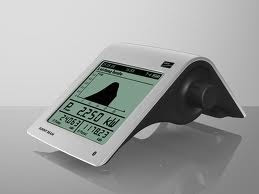
SunnyBeam Bluetooth display

This week we were set the "challenge" of connecting a SunnyBeam Bluetooth desktop display unit to a customer's SMA SunnyBoy 4000tl inverter. I put the word challenge in quotation marks as in reality, the set-up could not have been easier.

The SunnyBeam is a very easy to use unit display unit, providing the owner with information regarding the connected solar system's performance over the course of a day, month and year as well as an estimate of the system's financial benefit since installation.


Quite simply it requires the installer to set the Bluetooth NetID setting on the SMA inverter to anything between 2-9 or A-G before commissioning. The factory setting of 1 will not suffice for connection of a SunnyBeam. Then the installer proceeds to commission the inverter as per normal.

Once the solar system is up and running it is time to unpack and power up the SunnyBeam. Follow the simple on screen instructions using the rotary scroller and button single input controller. Set the language, date, time etc and the SunnyBeam will search for Bluetooth signal from SMA inverters, choose the correct NetID and the little display unit will connect and operate correctly, job done.

All in all a triumph for SMA and another happy customer for Norman Environmental. Note that if required at a later the system can be added by decommissioning the solar system very briefly and adding the SunnyBeam post installation.

Our unit came complete with German only instructions, if you have the same experience (and don't understand German!) then you can download the English instructions using the link below.

http://files.sma.de/dl/8584/BeamBT-BEN094911.pdf

- Posted using BlogPress from my iPad, what a brilliant App!

Sunday, 21 August 2011

Do androids dream of Electric Cars?

In May Audi reported that they are due to release their first full-electric car, the R8 E-tron. At the moment, the electric car industry is slow, with high prices and questions over the cars’ battery and charging facilities. However,Audi is well known for high performance high quality vehicles, so we wonder whether this development will be a watershed for the electric car industry as they begin to cross the line from fuel to fuel-cell. Audi are certainly tackling the issue of performance head on with the R8 model, with a 150 mile range and 0-60 of 4.8secs.  We expect this performance will come at a premium.


Norman Environmental understand how important our cars are to us in modern society, they give us independence and freedom to go about our lives locally, nationally and even onto the continent.  As a result rising fuel prices are an issue we are all struggling with, alongside the obvious carbon problem. Therefore we ask the question, is the now the time to start thinking about going electric or hybrid as a viable alternative to petrol and diesel?  The Nissan Leaf has shown that a family sized car for 'about town' use is feasible, if a little pricey.

There are many other concerns with the electric car, the primary perceived problem being a general lack of charging stations. It is true that charging points are sparse throughout the UK and the public are anxious that if they invest in an electric car, recharging their battery will be an obstacle. Although there are hopes for charging stations to increase, as electric car-charging firm ‘Chargemaster’ insist that by the end of 2012 there will be 4,000 points across Britain. This asserts to us that there is a future for electric cars.

Demand wil be driven by price of fuel and the strengthening movement to reduce carbon so it’s a race to market, but will other manufacturers be able to catch up with the likes of Toyota, Nissan and now Audi?

We at Norman Environmental view electric cars as the future of private transport and are excited to view Audi’s electric effort as a beacon of hope for the future. We hope to invest in an electric or hybrid vehicle for our company soon, perhaps Audi will provide the answer.

We hope you feel as passionately about the environment as we do at Norman Environmental and if you are looking at ways you can reduce your carbon footprint in your home, please do not hesitate to contact us

Thursday, 18 August 2011

Railing against price increases

The Government released the news on Monday that from 2012 rail prices will increase by 8 per cent on average, much to the chagrin of commuters everywhere and shadow transport secretary Maria Eagle.

We know as a country it is important to cut our carbon emissions to protect the environment and this is something that Norman Environmental feels very strongly about. Surely in rubber stamping these increases, the Government is discouraging the public to use communal transport by making it impossible for working citizens to keep up with these rises.  The first £10k season ticket is just around the corner.

Unfortunately, the cost of our lifestyles is constantly on the up, with food, petrol, clothing etc all contributing to high inflation. How is the government not taking into consideration that the wages we receive, pay for our working lifestyle? All the hard working rail-commuters out there are the ones who are being punished by this increase.

Rail prices will hit those who travel at peak times. This may encourage the elderly and the poor to travel at different times throughout the day, but what about those who are travelling to work? Do they have any other option but to pay these ridiculous prices?

Of course, there is another alternative on longer routes; to travel around Britain using low cost airlines - which can be cheaper than using the rail network. On top of that commuters will be guaranteed a seat, but what will this mean for our environment? A plane produces far greater carbon emissions than a train (up to 87% difference) but businesses and workers may not be able to think about this consequence as circumstances force them to cut costs. This is a serious issue that the government needs to tackle as for shorter commuter journeys people may start using their cars more, again not helping Britain meet our carbon targets.

The question is, can cuts be made elsewhere as train operators need continued investment to improve our lines? Perhaps some rural services need to be considered, although if cuts are made there, how will the rural communities feel? A clear and acceptable strategy needs to be drawn up with consultation from those that matter; the public.

If you are concerned about how your own travel and other habits effect the environment, then click here and complete our Carbon Footprint online form to see what you can do to reduce your environmental impact.

Saturday, 6 August 2011

We've got the (Solar)World in our hands

There are many many solar products available on the market today and whilst we have our favourites, we are not tied to any one particular product.  We feel that by having an 'open book' policy on materials we are able to greater satisfy the specific needs, wants and idiosyncrasies of each customer and their property - providing a bespoke design for every installation.

We have recently come across the SolarWorld range of products and are very impressed by the quality, ease of installation and competitive pricing. All of which can help us keep to our mantra of providing high quality solar PV installations, at an attractive price, to maximise customer satisfaction, confidence and financial returns.

The SolarWorld rail system is particularly interesting due to it's simplicity and size.  The end and mid-brackets that hold down the solar panels to the rail are based around a round washer system that is easy to install and reduces the gaps between modules, allowing designers to potentially fit more panels per square metre.  This has the knock-on benefit of maximising the kW size of the installed system and the returns that can be gained, again fulfilling our own business targets.

SolarWorld also offer a grid system, rather than just the standard horizontal or vertical rails, on which their panels can be installed.  The grid system is designed to withstand greater wind speeds, such as those experienced at higher altitudes, providing greater rigidity and security where required.  Just just take our word for it, have a look at the short video below.


Look out for the case studies pages on our website for a write up on our first SolarWorld installation.

Monday, 25 July 2011

Landlords can make the most of the Feed-in-Tariff

Whilst Norman Environmental would argue that anyone with a roof is a candidate for Solar PV in the UK (ok, not everyone, but close enough), certain people are especially good candidates for many different reasons, some technical some circumstantial.  

It was our pleasure and honour this week to present to the Cardiff Landlords' Association about the benefits of solar PV and the feed in tariff. Whilst most people who happen across this blog will be aware that a 2kW solar PV system can bring 12% yearly yields increasing over a 25 year period - not all will know that the generation tariff price falls for systems of 4kW and above, and falls again for systems above 10kW.  They fall further still for systems of 50kW and above. All as depicted by the bar chart below.


This was put to the Cardiff Landlords Association so that they may understand the basis of the feed in tariff and how it pertains to solar PV in the UK.  Building on this information however, we had an ace up our sleeve; landlords with multiple properties can take advantage of the sliding scales of payment by maximising their FiT returns at each of their eligible properties.


The above graph shows, in red, how multiple property installations can each take advantage of the 43.3p tariff to maximise their returns, the grey line shows how large scale installations can suffer from diminishing returns.  Over the course of 25 years therefore, 25 landlords installations of 2kW each could expect to receive £250k more in FiT income than a single 50kW installation

This means that multi-property landlords can invest for their own benefit across their portfolio, or even offer their roofs to pension funds and other investors that are looking to make long term gains from a secure, government backed opportunity.


if you are a landlord looking to make the most of the feed-in-tariff then click here to see a PDF of the full presentation or here to submit your details and we'll get in touch to assist you.  Also, you can visit the Cardiff Landlords Association website, sponsored by Lobster Web Design, by clicking here.