Saturday, 24 September 2011

SunnyBeam Bluetooth display

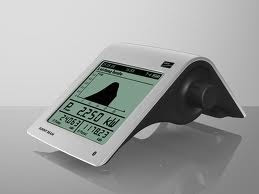
This week we were set the "challenge" of connecting a SunnyBeam Bluetooth desktop display unit to a customer's SMA SunnyBoy 4000tl inverter. I put the word challenge in quotation marks as in reality, the set-up could not have been easier.

The SunnyBeam is a very easy to use unit display unit, providing the owner with information regarding the connected solar system's performance over the course of a day, month and year as well as an estimate of the system's financial benefit since installation.


Quite simply it requires the installer to set the Bluetooth NetID setting on the SMA inverter to anything between 2-9 or A-G before commissioning. The factory setting of 1 will not suffice for connection of a SunnyBeam. Then the installer proceeds to commission the inverter as per normal.

Once the solar system is up and running it is time to unpack and power up the SunnyBeam. Follow the simple on screen instructions using the rotary scroller and button single input controller. Set the language, date, time etc and the SunnyBeam will search for Bluetooth signal from SMA inverters, choose the correct NetID and the little display unit will connect and operate correctly, job done.

All in all a triumph for SMA and another happy customer for Norman Environmental. Note that if required at a later the system can be added by decommissioning the solar system very briefly and adding the SunnyBeam post installation.

Our unit came complete with German only instructions, if you have the same experience (and don't understand German!) then you can download the English instructions using the link below.

http://files.sma.de/dl/8584/BeamBT-BEN094911.pdf

- Posted using BlogPress from my iPad, what a brilliant App!

Sunday, 21 August 2011

Do androids dream of Electric Cars?

In May Audi reported that they are due to release their first full-electric car, the R8 E-tron. At the moment, the electric car industry is slow, with high prices and questions over the cars’ battery and charging facilities. However,Audi is well known for high performance high quality vehicles, so we wonder whether this development will be a watershed for the electric car industry as they begin to cross the line from fuel to fuel-cell. Audi are certainly tackling the issue of performance head on with the R8 model, with a 150 mile range and 0-60 of 4.8secs.  We expect this performance will come at a premium.


Norman Environmental understand how important our cars are to us in modern society, they give us independence and freedom to go about our lives locally, nationally and even onto the continent.  As a result rising fuel prices are an issue we are all struggling with, alongside the obvious carbon problem. Therefore we ask the question, is the now the time to start thinking about going electric or hybrid as a viable alternative to petrol and diesel?  The Nissan Leaf has shown that a family sized car for 'about town' use is feasible, if a little pricey.

There are many other concerns with the electric car, the primary perceived problem being a general lack of charging stations. It is true that charging points are sparse throughout the UK and the public are anxious that if they invest in an electric car, recharging their battery will be an obstacle. Although there are hopes for charging stations to increase, as electric car-charging firm ‘Chargemaster’ insist that by the end of 2012 there will be 4,000 points across Britain. This asserts to us that there is a future for electric cars.

Demand wil be driven by price of fuel and the strengthening movement to reduce carbon so it’s a race to market, but will other manufacturers be able to catch up with the likes of Toyota, Nissan and now Audi?

We at Norman Environmental view electric cars as the future of private transport and are excited to view Audi’s electric effort as a beacon of hope for the future. We hope to invest in an electric or hybrid vehicle for our company soon, perhaps Audi will provide the answer.

We hope you feel as passionately about the environment as we do at Norman Environmental and if you are looking at ways you can reduce your carbon footprint in your home, please do not hesitate to contact us

Thursday, 18 August 2011

Railing against price increases

The Government released the news on Monday that from 2012 rail prices will increase by 8 per cent on average, much to the chagrin of commuters everywhere and shadow transport secretary Maria Eagle.

We know as a country it is important to cut our carbon emissions to protect the environment and this is something that Norman Environmental feels very strongly about. Surely in rubber stamping these increases, the Government is discouraging the public to use communal transport by making it impossible for working citizens to keep up with these rises.  The first £10k season ticket is just around the corner.

Unfortunately, the cost of our lifestyles is constantly on the up, with food, petrol, clothing etc all contributing to high inflation. How is the government not taking into consideration that the wages we receive, pay for our working lifestyle? All the hard working rail-commuters out there are the ones who are being punished by this increase.

Rail prices will hit those who travel at peak times. This may encourage the elderly and the poor to travel at different times throughout the day, but what about those who are travelling to work? Do they have any other option but to pay these ridiculous prices?

Of course, there is another alternative on longer routes; to travel around Britain using low cost airlines - which can be cheaper than using the rail network. On top of that commuters will be guaranteed a seat, but what will this mean for our environment? A plane produces far greater carbon emissions than a train (up to 87% difference) but businesses and workers may not be able to think about this consequence as circumstances force them to cut costs. This is a serious issue that the government needs to tackle as for shorter commuter journeys people may start using their cars more, again not helping Britain meet our carbon targets.

The question is, can cuts be made elsewhere as train operators need continued investment to improve our lines? Perhaps some rural services need to be considered, although if cuts are made there, how will the rural communities feel? A clear and acceptable strategy needs to be drawn up with consultation from those that matter; the public.

If you are concerned about how your own travel and other habits effect the environment, then click here and complete our Carbon Footprint online form to see what you can do to reduce your environmental impact.

Saturday, 6 August 2011

We've got the (Solar)World in our hands

There are many many solar products available on the market today and whilst we have our favourites, we are not tied to any one particular product.  We feel that by having an 'open book' policy on materials we are able to greater satisfy the specific needs, wants and idiosyncrasies of each customer and their property - providing a bespoke design for every installation.

We have recently come across the SolarWorld range of products and are very impressed by the quality, ease of installation and competitive pricing. All of which can help us keep to our mantra of providing high quality solar PV installations, at an attractive price, to maximise customer satisfaction, confidence and financial returns.

The SolarWorld rail system is particularly interesting due to it's simplicity and size.  The end and mid-brackets that hold down the solar panels to the rail are based around a round washer system that is easy to install and reduces the gaps between modules, allowing designers to potentially fit more panels per square metre.  This has the knock-on benefit of maximising the kW size of the installed system and the returns that can be gained, again fulfilling our own business targets.

SolarWorld also offer a grid system, rather than just the standard horizontal or vertical rails, on which their panels can be installed.  The grid system is designed to withstand greater wind speeds, such as those experienced at higher altitudes, providing greater rigidity and security where required.  Just just take our word for it, have a look at the short video below.


Look out for the case studies pages on our website for a write up on our first SolarWorld installation.

Monday, 25 July 2011

Landlords can make the most of the Feed-in-Tariff

Whilst Norman Environmental would argue that anyone with a roof is a candidate for Solar PV in the UK (ok, not everyone, but close enough), certain people are especially good candidates for many different reasons, some technical some circumstantial.  

It was our pleasure and honour this week to present to the Cardiff Landlords' Association about the benefits of solar PV and the feed in tariff. Whilst most people who happen across this blog will be aware that a 2kW solar PV system can bring 12% yearly yields increasing over a 25 year period - not all will know that the generation tariff price falls for systems of 4kW and above, and falls again for systems above 10kW.  They fall further still for systems of 50kW and above. All as depicted by the bar chart below.


This was put to the Cardiff Landlords Association so that they may understand the basis of the feed in tariff and how it pertains to solar PV in the UK.  Building on this information however, we had an ace up our sleeve; landlords with multiple properties can take advantage of the sliding scales of payment by maximising their FiT returns at each of their eligible properties.


The above graph shows, in red, how multiple property installations can each take advantage of the 43.3p tariff to maximise their returns, the grey line shows how large scale installations can suffer from diminishing returns.  Over the course of 25 years therefore, 25 landlords installations of 2kW each could expect to receive £250k more in FiT income than a single 50kW installation

This means that multi-property landlords can invest for their own benefit across their portfolio, or even offer their roofs to pension funds and other investors that are looking to make long term gains from a secure, government backed opportunity.


if you are a landlord looking to make the most of the feed-in-tariff then click here to see a PDF of the full presentation or here to submit your details and we'll get in touch to assist you.  Also, you can visit the Cardiff Landlords Association website, sponsored by Lobster Web Design, by clicking here.

Forming our future

As our business and website grows we are making use of more and more web-based programs and services to help our business perform.  Wufoo is the latest of these add-ons and, due to what it does for us, we've decided to tell you all about it.


Wufoo is a form creator that allows us to collect data from potential customers and act on it to (hopefully) turn them into actual customers.  There is a simple drag and drop system for the creation of forms which can be hosted on our website, once the data is posted it is saved in Wufoo's central directory and notifications are posted to our email address.  It is a free and easy way to collect potential client information for Solar PV, Solar Thermal and Energy Efficiency Surveys.


The team at Wufoo couldn't be more helpful and quick to respond when you have a query of any type, even if you only sign up to their free service provision.  Forms can be emailed or web-hosted, are easily editable and can be customised for your needs as well as having integration available for payment schemes such as paypal.


So if you're looking for a way to collect data online, for your business, personal or academic purposes take a look at Wufoo, you won't regret it.

Thursday, 14 July 2011

Supply good energy to Good Energy

The Feed in Tariff is a wonderful thing indeed, allowing those of us who produce electricity via our own resources to be financially rewarded will raise awareness of the scarcity of energy and increase our respect for it. 

The FiT scheme is simple too; the government tax energy providers via the carbon levy and put that money into a pot.  The funds are redistributed to the energy providers who can prove that their customers have MCS accredited installations that are producing accurately measured quantities of electricity. The same customers are then reimbursed by the energy providers for each unit they produce on a quarterly basis.

A number of energy providers see this as an administrative chore, and who can blame them?  After all the energy they are 'purchasing' from micro-generators is so small when compared with the levels they produce via the fossil fuel hungry power stations. Good Energy are a company who sell only renewable energy, that is to say that 100% of the energy they sell is provided through, solar, hydro, anaerobic digestion, wind turbines or any other form of non-polluting renewable energy source.  They are the only company in the UK who offer such a supply.


As a result of their dedication to renewable energy Good Energy are excellent administrators of the FiT scheme.  Their application packs are simple, clear and concise whilst being comprehensive and transparent in walking their energy suppliers right through the FiT process.

That is why we at Norman Environmental encourage all our PV customers, or anyone seeking to become a micro-generator, to sign up to selling their energy to Good Energy - a company that encourages micro-generation as the very back-bone to it's business. Just like us really.